
15 November 2026 · 2 min read
AI in education needs a meaningful right to say no
AI capability is advancing. Universities still need control over pricing, access, assessment and the choice to decline.
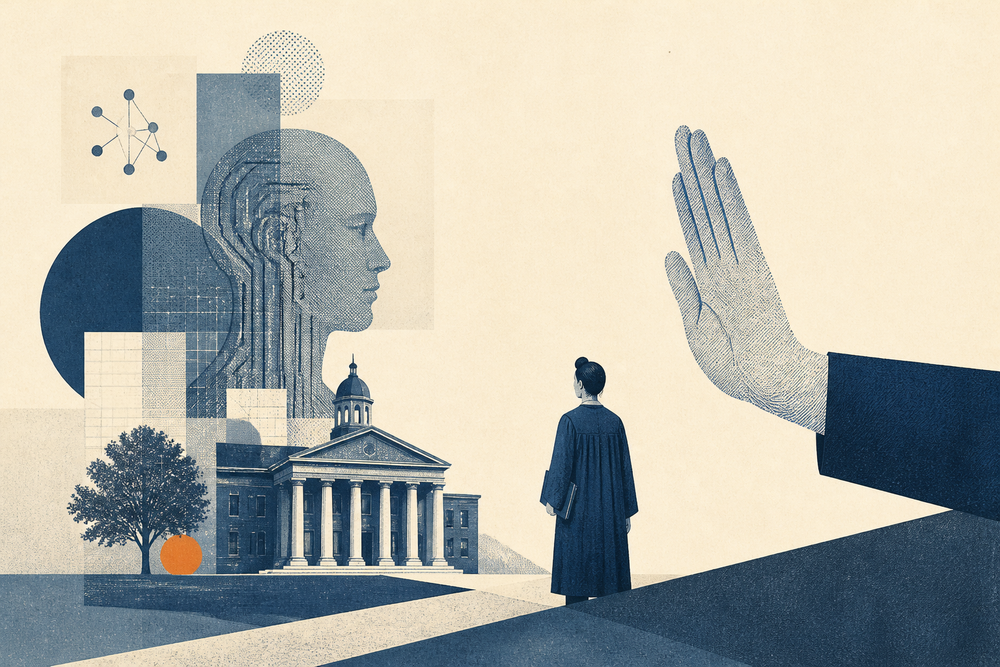
Universities can gain useful AI capabilities while losing practical control over how they use them. When access, pricing and product changes sit with a handful of suppliers, an institution’s freedom to choose can become surprisingly narrow.
The capabilities deserve attention. Anthropic reports that Fable 5.2 coordinated agents to build a prototype operating system. Google’s Genie 4 research preview turns prompts into interactive environments. For educators, the attraction is obvious: learning experiences that once required specialist teams may become much easier to build.
Getting something impressive on screen is only the beginning. A simulated aviation hangar still needs to represent the things students are supposed to learn. A historical reconstruction needs its uncertainties made visible. A demonstration can suggest an educational possibility without establishing that it is ready for a class.
The same distinction applies to the business underneath the tools. NVIDIA’s announced leadership change has sharpened scrutiny of the financing that supports AI infrastructure. Useful software can coexist with fragile commercial arrangements. Universities building teaching around these services need to consider what happens if prices rise, access changes or a provider alters its priorities.
That becomes particularly uncomfortable when AI arrives inside services an institution already depends on. Refusing one feature may involve giving up something else people need. A meaningful choice requires knowing what can be switched off, what can be moved elsewhere and who bears the cost.
Students are making judgements of their own. In the preliminary 2026 AIinHE survey, 62 per cent of AI users answering the relevant question cited personal learning values as a strong reason to limit or avoid use. Using AI and wanting boundaries can coexist within the same person.
There is also a cost to removing educators from the work. Reading a pile of essays can reveal a misunderstanding shared across the class. Automating the marking may save time, but the teaching team still needs a reliable way to notice that pattern and respond.
The practical response starts with a few decisions made before dependence becomes routine: define the learning purpose, retain human responsibility for consequential judgements, check the terms of access and establish a workable exit. Ask students where they want assistance and where they want to do the thinking themselves.
The technology will keep changing. Institutions can still make deliberate choices about what they adopt, what they decline and what they remain responsible for.
For more, listen to S3E01 of Adjunct Intelligence, where Dale Leszczynski and Nick McIntosh connect the latest AI releases with funding, regulation and the choices facing education.