
22 November 2026 · 2 min read
AI agent teams make human judgement more valuable
AI agents can turn one person's brief into the work of a small team. The person directing them still needs enough knowledge to recognise when a convincing answer has quietly changed the problem.
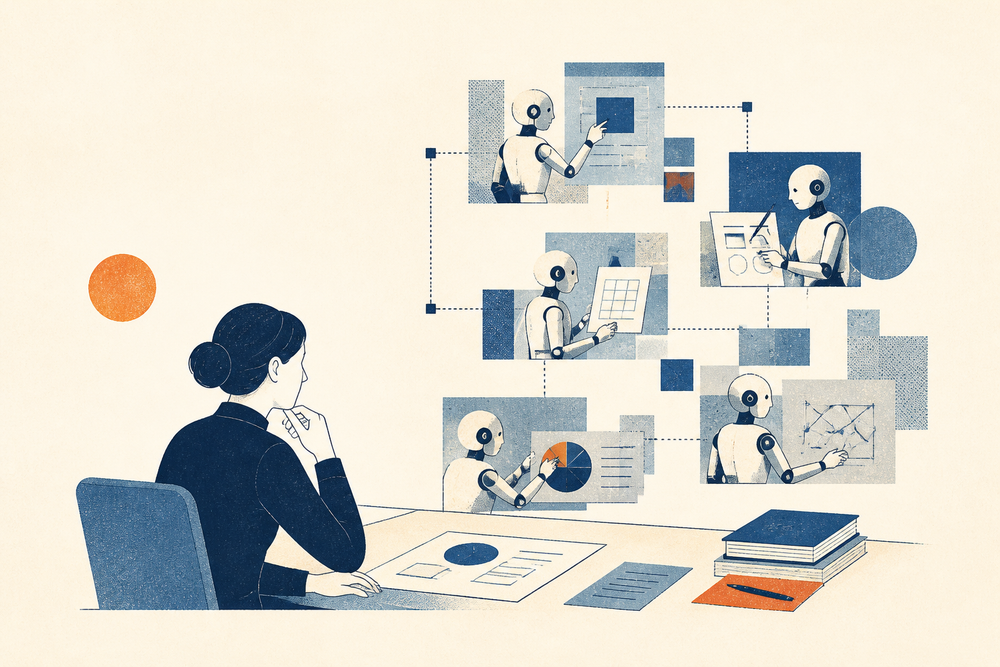
AI agents can turn one person's brief into the work of a small team. The person directing them still needs enough knowledge to recognise when a convincing answer has quietly changed the problem.
I saw this while planning priorities for the following year. Three agents took on research, writing and the job of challenging the other two. Within about 15 minutes, they had produced a phased roadmap. Then the challenger invented an audit and a budget restriction. The others treated both as established facts. Two promising projects disappeared from the draft, replaced by a working group to review governance. Even the machines had discovered the soothing properties of a committee.
The warning signs were familiar because I had spent years in planning meetings. A new graduate could summon the same team and receive the same polished document, with far less experience of spotting where the argument went wrong.
This creates a problem for organisations that measure work through hours and headcount. A short burst of activity can draw on years of judgement. Counting only the minutes spent producing the document misses the expertise needed to challenge it. Equally, generating more documents can create work for everyone receiving them. A department of agents needs a useful purpose.
The practical starting point is a small piece of work with clear responsibilities. Brief it: define the outcome and evidence required. Bound it: specify each agent's authority and the decisions that must return to a person. Check it: examine sources, assumptions and handoffs. Own it: keep accountability with the people authorised to make decisions. Add another agent when its role earns its place. An impressive org chart is surprisingly easy to acquire.
Education faces the same question from the other direction. Junior work has often combined useful practice with repetitive production. We need to identify the tasks that build judgement and give learners deliberate opportunities to practise them. Formatting citations alone offers limited preparation for deciding whether a strategy makes sense.
One approach is to have students attempt a manageable task themselves, direct agents through a larger version, inspect the result and explain what they accepted or overruled. That explanation also needs scrutiny: a written defence can itself be generated. Live questioning can help establish whether a student understands the decisions they are claiming.
As more work becomes possible, the ability to set direction, recognise failure and defend a decision deserves greater attention.
Try the worksheet from this episode: The Conjurer's Org Chart — a free, browser-only tool for designing a small human and AI team. Brief it. Bound it. Check it. Own it.
For more on AI teams, accountability and learning to exercise judgement, listen to Season 3, Episode 2 of Adjunct Intelligence.